






Mercedes Sprinter vs Ford Transit for Camper Van Conversions:
Which Should You Choose?
The Short Answer
It’s the question we hear more than any other. Not “what’s the best floor plan” or “how many solar panels do I need” it’s “should I get a Sprinter or a Transit?”
We’ve been converting vans since 1961. We’ve built on Ford Econolines, VW buses, Chevy vans, Dodge ProMasters, and everything in between. But for the last decade, the Sprinter and the Transit have been the two chassis that dominate our shop floor. We’ve converted thousands of each.
Here’s the short answer: both are excellent platforms, and we do great conversions on both. But they’re different enough that one usually fits your life better than the other. This page will help you figure out which one that is.
No blog-speak. No “it depends” hand-waving. Just what we’ve learned from building vans for 60 years.
Prices and specs throughout this page are planning estimates. Contact Sportsmobile for current pricing on new chassis orders and a build quote specific to your needs.
Sprinter vs Transit: At a Glance
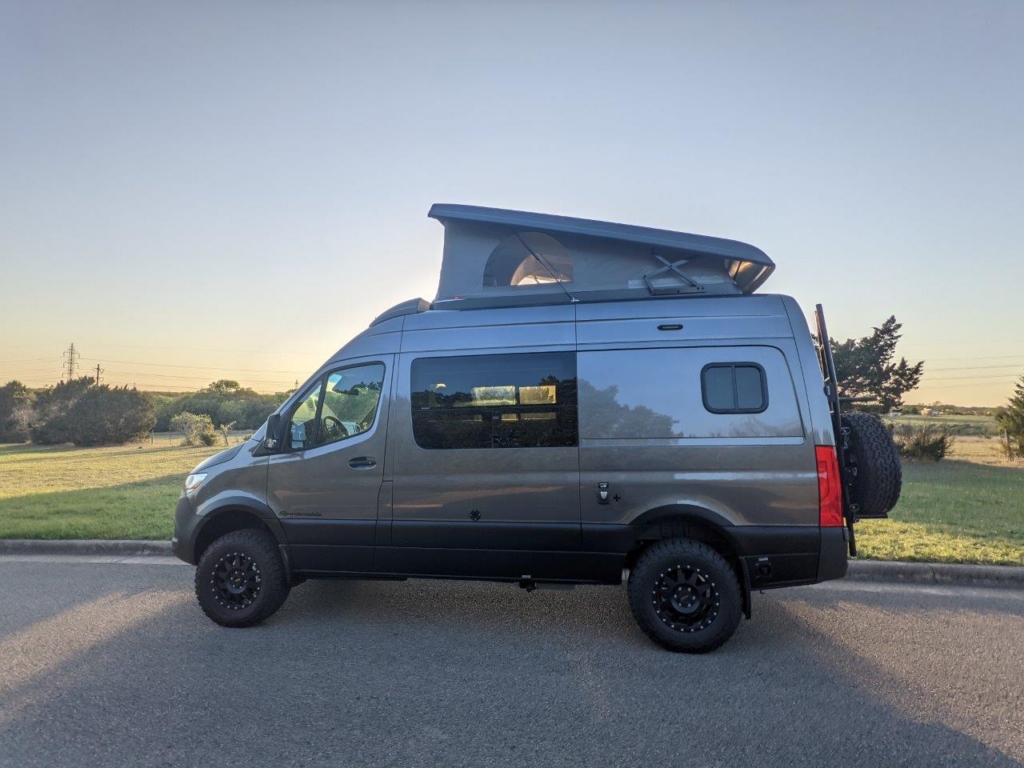
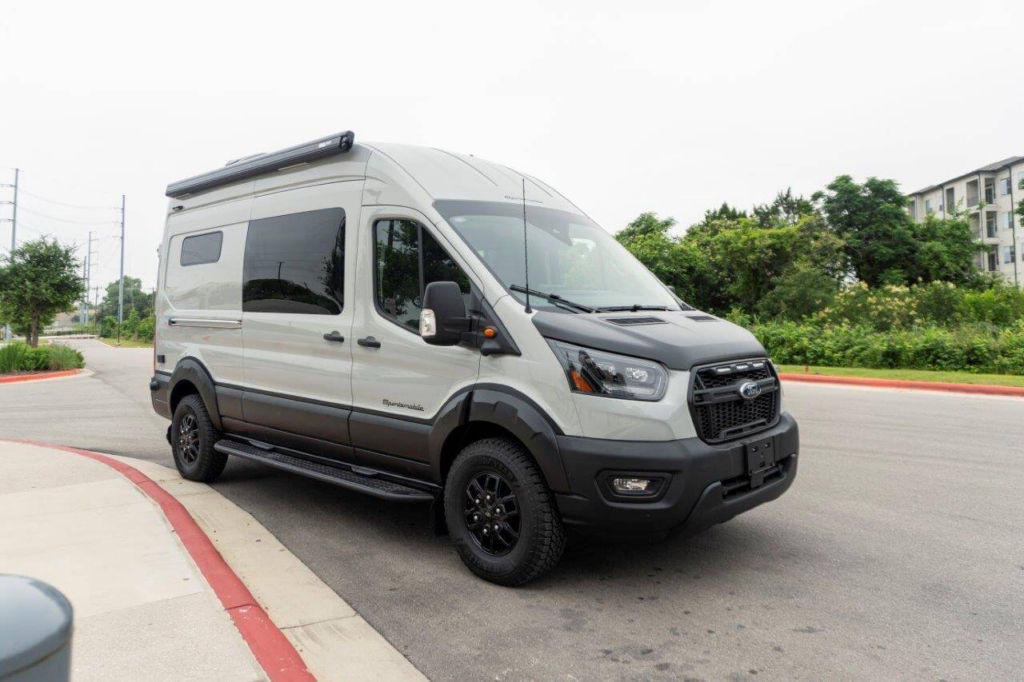
| Specification | Mercedes Sprinter | Ford Transit |
|---|---|---|
| Starting price range (new cargo van) | Typically $52,000 – $72,000 | Typically $48,000 – $62,000 |
| Engine | 2.0L 4-cyl turbo diesel | 3.5L V6 gas (EcoBoost optional) |
| Drivetrain | AWD standard on most configurations | RWD standard, AWD optional |
| Wheelbase options | 144″, 170″, 170″ extended | 130″, 148″, 148″ extended |
| Max interior height (high roof) | ~75″ | ~78″ |
| Max cargo length (behind front seats) | ~15′ (170″ extended) | ~14′ (148″ extended) |
| Interior width (between walls) | ~70″ | ~70″ |
| Fuel economy (high roof, unladen) | 14–18 mpg (diesel) | 13–18 mpg (gas) |
| Towing capacity (varies by configuration) | Up to 7,500 lbs | Up to 7,500 lbs |
| US dealer network (approximate) | ~380 | ~3,000+ |
| Sportsmobile conversion cost | $40,000 – $80,000+ | $40,000 – $80,000+ |
Actual fuel economy depends on build weight, driving conditions, and configuration. Towing capacity varies by engine, drivetrain, and chassis spec. Dealer counts are approximate and change over time. Conversion costs depend on options selected. Contact us for a build quote.
What It Actually Costs: Van + Conversion + Ownership
People fixate on the sticker price of the base van. That matters, but it’s not the whole story.
Base van cost
A new cargo van, the blank canvas, costs more for the Sprinter. Depending on configuration, expect to pay about $5,000 more for a comparably equipped Sprinter versus a Transit. The gap widens if you want AWD on the Transit (it’s an option) while AWD is standard on most current Sprinters.
Used van pricing fluctuates with the market. As of mid-2026, a 3-year-old cargo van with 40,000 miles typically runs roughly $35,000 to $55,000 depending on chassis, mileage, and condition. Sprinters have historically held their value better, which is good when you sell, but means you pay more upfront.
Conversion cost
Good news: a Sportsmobile conversion costs about the same regardless of which chassis it’s on. The cabinets, electrical system, plumbing, pop-top, bed, and upholstery don’t change. Our full builds typically run $40,000 to $80,000+, depending on how far you go. The chassis is the variable.
Depending on build spec, a complete Sportsmobile on a new chassis typically ranges from roughly $90,000 to $145,000+. Contact us for a build quote specific to your needs. Every build is different and pricing changes.
Maintenance and repairs
This is where the gap widens for some owners.
Sprinter maintenance is more expensive and less convenient. Oil changes on a Sprinter diesel typically range from $200 to $400, depending on your location and whether you use a dealer or independent shop. Diesel-specific components (DEF system, DPF filter, turbo) are reliable but expensive when they fail. And if you break down in rural Montana, the nearest Mercedes dealer might be 300 miles away. Many independent shops won’t touch a modern Sprinter.
Transit maintenance is simpler and cheaper. Oil changes at most shops run $50 to $80. Ford parts are everywhere. If something breaks in Lander, Wyoming, there’s a Ford dealer in town. For full-time travelers who cover real miles, this alone tips the scales toward the Transit for a lot of people.
Resale: Sprinters have historically held their value better, especially AWD models. A 5-year-old Sportsmobile Sprinter has historically sold for a higher percentage of its original cost than a comparable Transit. Resale value depends on mileage, condition, and market demand. You can check current listings or ask us for recent comps.
The honest math
These are rough planning numbers, not quotes. Every build is different. Contact us for pricing specific to your build.
| Cost factor | Sprinter | Transit |
|---|---|---|
| New base van (ballpark, mid-2026) | ~$52,000 – $72,000 | ~$48,000 – $62,000 |
| Full Sportsmobile conversion (typical) | $40,000 – $80,000+ | $40,000 – $80,000+ |
| Total build cost (estimate) | $145,000+ | $140,000+ |
| Annual maintenance (owner reported, 15K mi/yr) | $800 – $1,200 | $300 – $500 |
| Resale value after 5 years | Historically higher % retained | Historically lower % retained |
Neither is the “cheap” option. The Transit typically saves money upfront and on annual maintenance. The Sprinter has historically returned more at resale. Which one pencils out better depends on how long you own it and how many miles you drive.
Interior Space & What Fits Where
If you spend 100 nights a year in your van, inches matter.
The Sprinter lineup
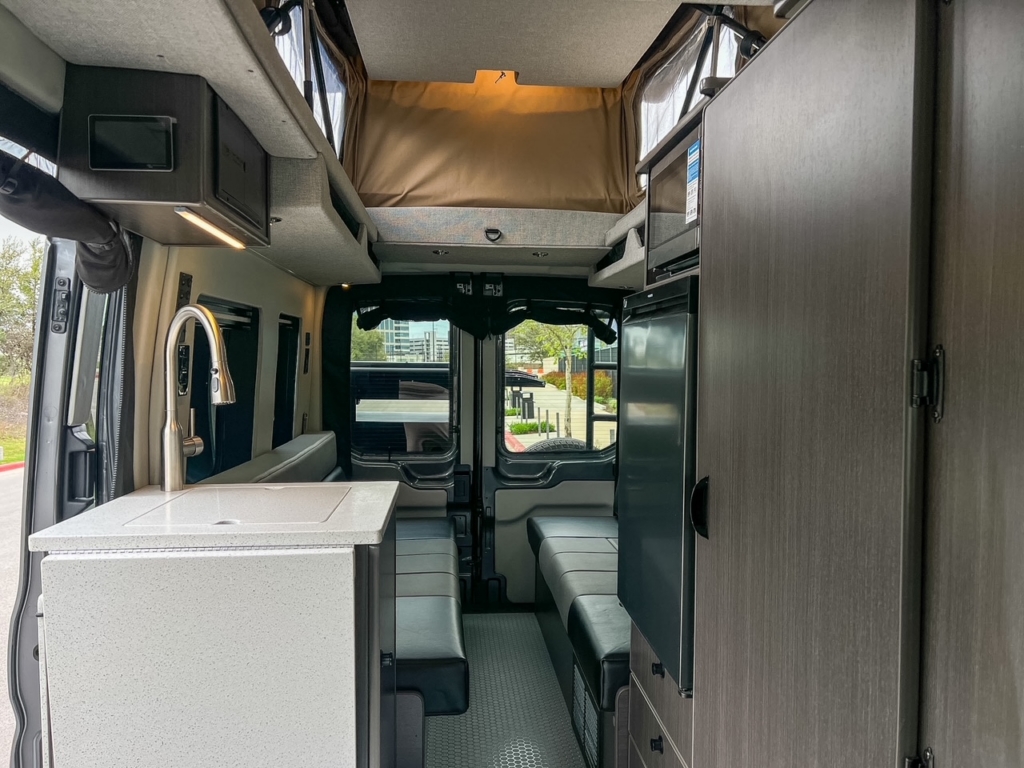
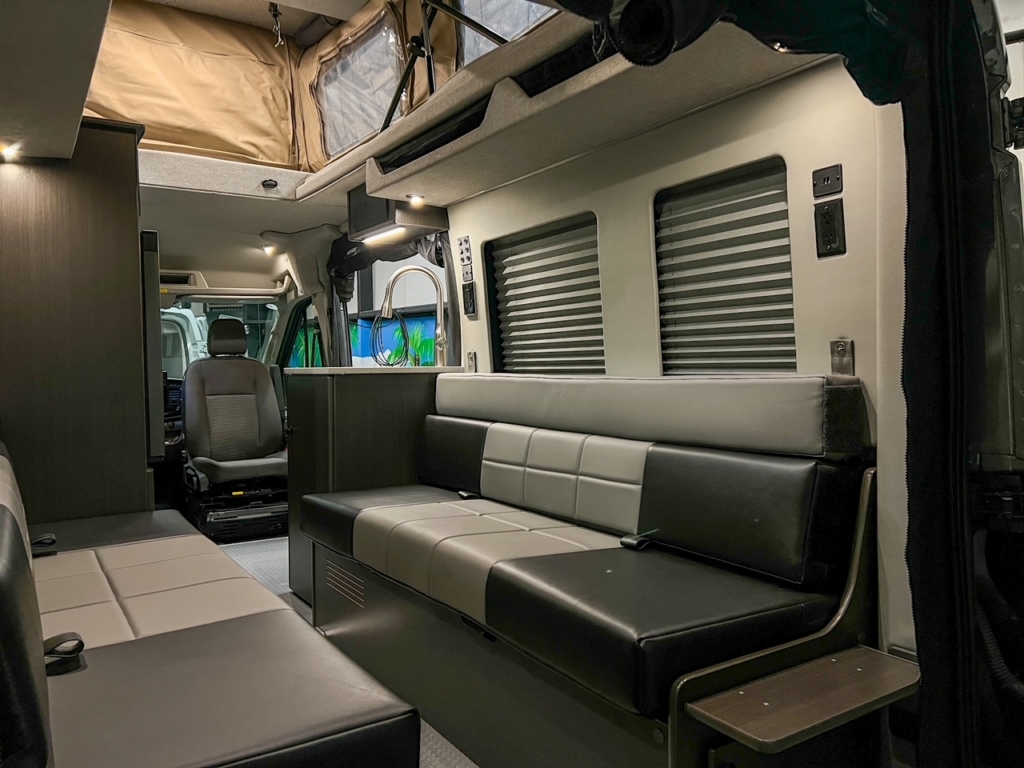
- 144″ WB (RB): 19’4″ overall. This is our most popular Sprinter size. Fits in a standard parking spot. Works great for couples or solo travelers. Interior length behind front seats: roughly 10′.
- 170″ WB (EB): 22’9″ overall. The sweet spot for families or anyone who wants a fixed bed and a dinette. Interior length: roughly 13′.
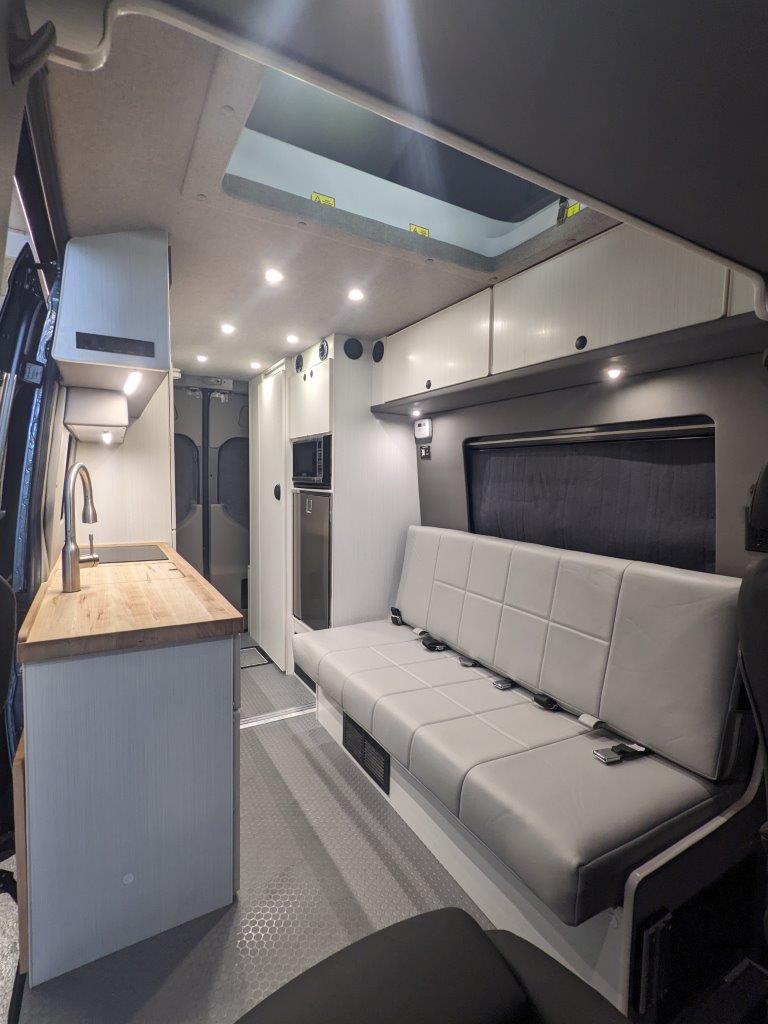
- 170″ Extended (LB): 24′ overall. Among the largest production cargo vans you can buy. You get nearly 15 feet of interior build space. Fits a full bathroom, separate bed, and dinette. Parking gets interesting.
The Transit lineup
- 130″ WB (RB): 18’4″ overall. A foot shorter than the Sprinter 144. Tighter but workable for a weekend camper or minimalist build. Interior length: roughly 9′.
- 148″ WB (EB): 19’8″ overall. Close to the Sprinter 144 in usable space. Most common Transit we build on.
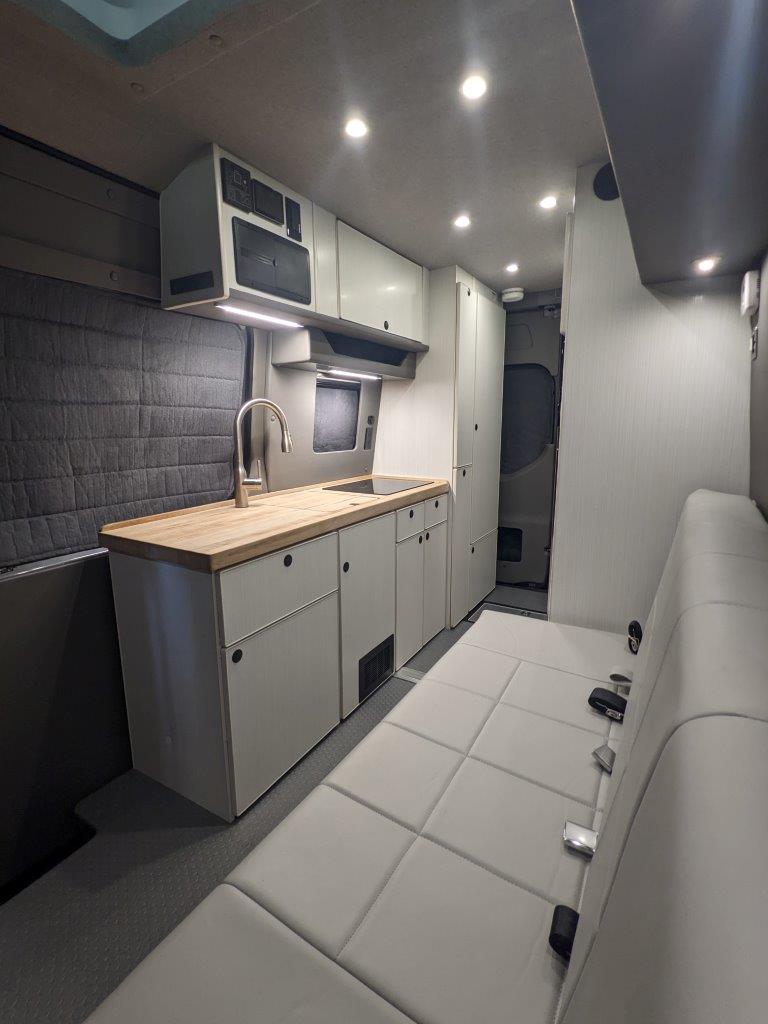
- 148″ WB Extended (LB/EL): 22’2″ overall. Comparable to the Sprinter 170″ EB. Interior length: roughly 14′. This is the one to get if you want Transit serviceability with Sprinter-like space.
What we see in our shop
The Transit 148″ EB and the Sprinter 144″ are popular chassis for camper conversions, and for good reason, they’re in the Goldilocks zone of “big enough to live in, small enough to drive daily.”
If maximum interior length is your priority, the Sprinter 170″ Extended gives you the most room to work with. The Transit comes close with the extended body, but the Sprinter has about a foot more to work with.
Both vans offer roughly the same interior width (~70″) and height (~75–78″) in high-roof configuration. And yes, our Penthouse pop-top is available on both.
4×4, AWD & Getting Off Pavement
A lot of buyers arrive with a mental image: van perched on a cliff in Utah, sunset, no one around for miles. They want the off-road version.
Sprinter AWD
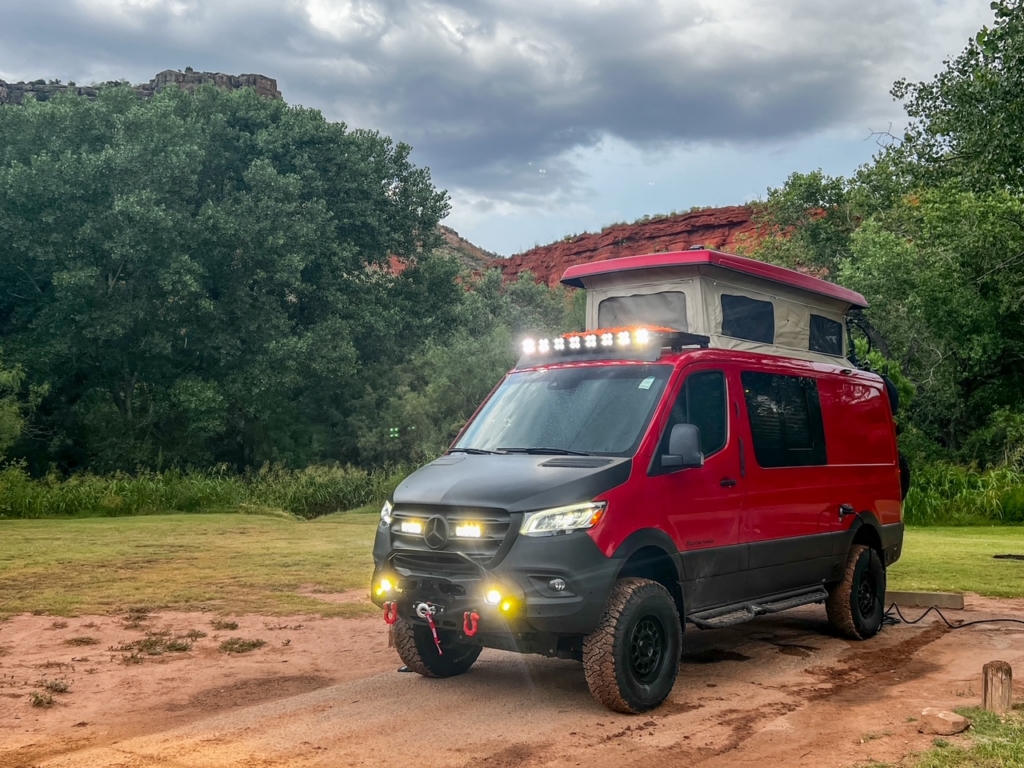
Current-model Sprinters offer AWD as standard on most configurations. It’s a full-time system, always on, no buttons to push. Ground clearance is roughly 7 inches stock, a bit more with the factory off-road package. It’s genuinely good on dirt roads, snow, sand, and mild trails. It is not a rock crawler, and no cargo van is.
The older 4×4 Sprinters (pre-2023) had a part-time system with low range. Those are sought after on the used market, but they’re harder to find and carry a premium. Manufacturer specs can change between model years. You can check availability when you’re ready to order.
Transit AWD
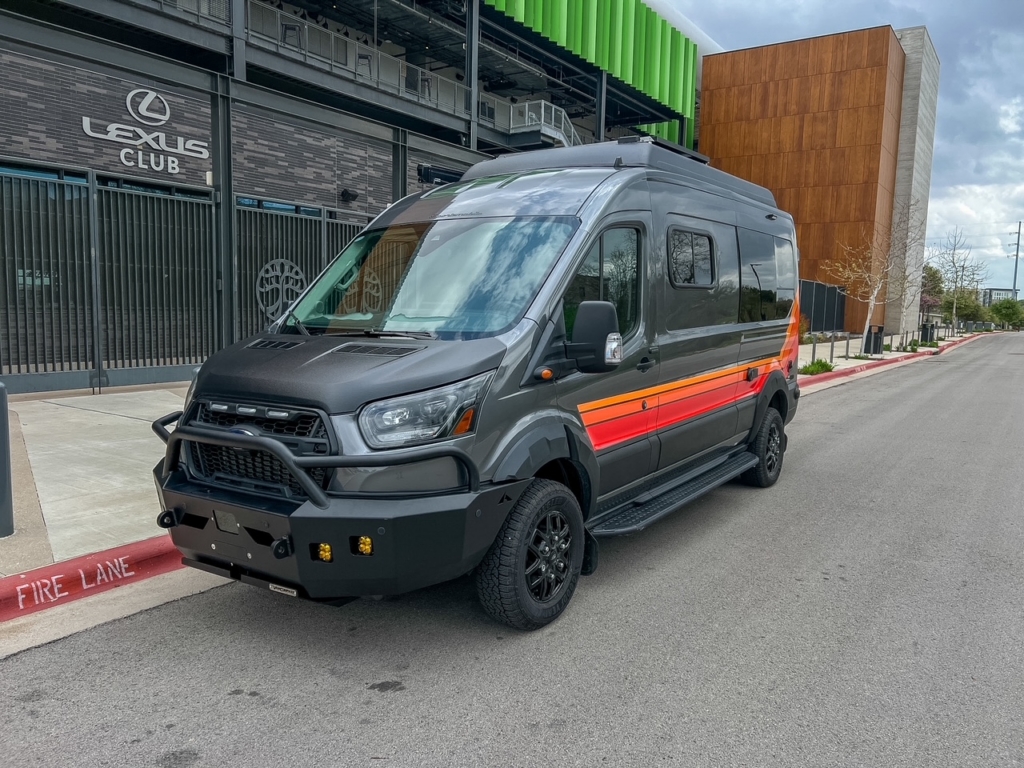
Ford offers AWD as an option on the Transit. Like the Sprinter, it’s an on-road-oriented system that handles snow and dirt well. The Transit Trail edition (2023+) adds a factory lift, all-terrain tires, and some skid-plate-style protection which is Ford’s answer to the “overland” crowd. It’s a solid setup for fire roads, BLM land, and winter driving.
Ground clearance on AWD Transit models is similar to the Sprinter, roughly 7 inches depending on configuration.
Which one’s better off-road?
Honestly, they’re about even for what most people actually do. Forest service roads, beach driving, desert two-tracks, ski trips, both handle it fine. Neither replaces a Jeep.
The bigger difference is how you get there. The Sprinter’s diesel engine and AWD are a capable match for high-altitude mountain passes. The Transit’s gas V6 is easier to live with day-to-day and doesn’t care if you’re 200 miles from a dealer who can service a diesel.
We build adventure-ready vans on both platforms. The chassis is rarely the limiting factor it’s your tire choice and ground clearance which matters more.
Living With It: Reliability, Service & Daily Life
After decades in this business, we hear the long-term ownership stories. Here’s what comes up again and again.
Sprinter ownership
The Sprinter’s diesel engine is a known quantity. We don’t see many major engine failures on well-maintained vans. But when a Sprinter does have an issue, it’s often expensive and requires a Mercedes dealer or a specialized diesel shop. DEF system issues, sensor faults, and emissions-related codes are the usual culprits. These vans don’t like to sit, they’re happiest being driven regularly.
Owners who love their Sprinters really love them. The driving experience is more refined, quieter at highway speed, better seats, better steering feel. It feels like a more expensive vehicle because it is one.
Transit ownership
The Transit’s V6 (and the optional EcoBoost turbo) is a workhorse. Parts are widely available and affordable. Most mechanics can work on a Ford V6. If you’re a full-time traveler doing 20,000+ miles a year, the Transit’s serviceability is hard to beat.
The trade-off: the Transit is less refined. More road noise. The stock seats aren’t as comfortable for 8-hour driving days (though plenty of owners swap them). The interior materials feel more commercial because that’s what the Transit is, a commercial van that happens to make an excellent camper.
What we tell customers
If you’re staying in North America and putting real miles on your van, the Transit’s service network is the single biggest practical advantage of either chassis. It’s not exciting, but it matters when you’re broken down on a Sunday in a rural area.
If you want the best highway cruiser with strong resale and you can handle higher maintenance costs, the Sprinter delivers.
Neither platform has a reliability nightmare story. Both will go 150,000+ miles if maintained. The difference is how much those miles cost and how much hassle they involve.
So Which One Should You Get?
Let’s make this simple.
Get the Sprinter if:
- You want diesel power and the best fuel economy in a van this size
- Maximum interior length matters (you need a 170″ Extended)
- You want stronger resale value
- You value highway refinement and a premium feel
- You’re comfortable with higher ownership costs
- You’re rarely far from a major metro area with Mercedes service
Get the Transit if:
- You want lower upfront cost and lower maintenance
- Gas engine simplicity matters more to you than diesel refinement
- You travel full-time and need service anywhere in North America
- You’re cost-conscious about the build and the ownership
- You don’t need the longest-possible van body
Still on the fence?
That’s normal. Most people who walk into our shop aren’t sure which chassis to pick. A call with one of our conversion experts can help you sort out which chassis fits your life. We’ll ask about your travel plans, budget, and priorities. We can then give you an honest recommendation.
Frequently Asked Questions
Is a Sprinter really more expensive to maintain than a Transit?
Yes. Oil changes, parts, and labor all typically cost more for a Sprinter. Based on owner reports, a typical year of maintenance on a Sprinter runs roughly $800–$1,200 versus $300–$500 for a Transit. Over five years, that’s several thousand dollars. Your costs will vary with mileage and driving conditions.
Which van gets better fuel economy?
The Sprinter diesel. High-roof cargo vans typically see 14–18 mpg versus 13–18 mpg for the gas Transit V6. Over 100,000 miles, that saves meaningful fuel money, though diesel usually costs more at the pump, which narrows the gap. Actual mpg depends on build weight and driving conditions.
Can I get a 4×4 Sportsmobile on either chassis?
We build on both AWD Sprinters and AWD Transits. We’ve also worked with the older true 4×4 Sprinters. Both handle forest roads, snow, and sand just fine. If you need serious rock-crawling capability, a van probably isn’t the right vehicle, but talk to us about what you have in mind.
Which van is better for a family of four?
The Sprinter 170″ or the Transit 148″ Extended. You’ll want the longer body for a fixed bed plus a dinette that converts to a second sleeping area. Both chassis can do this; the Sprinter gives you a bit more length to work with.
Do Sportsmobile conversions cost the same regardless of chassis?
Roughly, yes. The cabinets, electrical, plumbing, pop-top, and interior work cost about the same regardless of the van underneath. Your total cost differs because the base vans cost different amounts.
Which holds its value better?
The Sprinter. Historically, Sprinters retain a higher percentage of their original value than Transits, especially AWD models. If resale is a top concern, the Sprinter has the edge. Actual resale value depends on mileage, condition, and market demand.
Can I bring my own van for conversion?
Yes. Many of our customers buy a van first, then bring it to us for conversion. We work on customer-supplied vans regularly. Just check with us first about condition and suitability for the build you want.
How long does a Sportsmobile build take?
On either chassis, a full custom conversion typically takes 6–12 months from deposit to delivery. Timelines vary with build complexity and current shop volume. Some simpler builds go faster. Call us for our current schedule.
Ready to decide? Or at least get closer?
Explore real builds on each chassis, or talk to someone who’s built hundreds of both.
Or talk to a real person who’s built hundreds of both:
Last updated: June 2026. Pricing, specifications, and availability change. All dollar figures are planning estimates, not quotes. Base van pricing reflects approximate ranges at time of writing. Conversion costs vary with options selected. Fuel economy and maintenance costs are based on owner reports and will vary with driving conditions, build weight, and configuration. Contact Sportsmobile for current pricing and a build quote specific to your needs.