



Mobile Office Van Conversion: The Complete Guide to Working on the Road
Remote work didn’t invent the mobile office. Long before Starlink and lithium batteries, professionals in fields like construction, engineering, real estate, and surveying needed a workspace that could move with them. Sportsmobile has been building custom work vans since 1961 and the demand hasn’t slowed down. It’s only gotten more sophisticated.
Whether you’re a consultant who drives from client to client, a project manager who lives at job sites, or a remote worker who’d rather take meetings from a mountain than a conference room, a mobile office van conversion gives you a private, climate-controlled workspace with everything you need and none of what you don’t.
What Is a Mobile Office Van Conversion?
A mobile office van conversion is a cargo van that has been custom-built into a fully functional workspace. Depending on your needs, that can mean anything from a simple desk-and-power-outlet setup to a full rolling command center with dual monitors, a standing desk, satellite internet, a printer, climate control, and a refrigerator for long days in the field.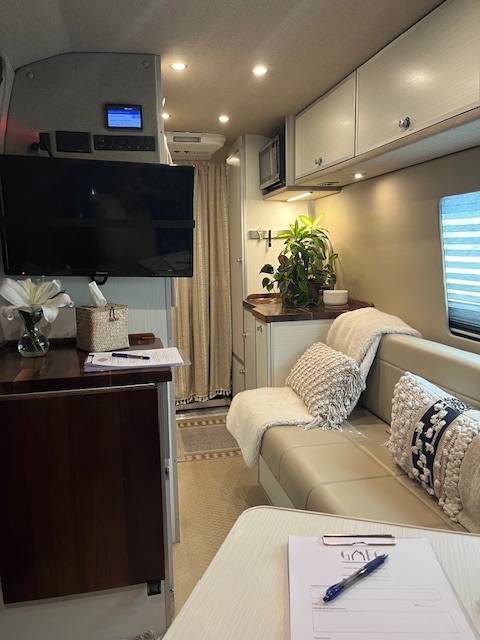
The key difference between a mobile office and a basic work van is intentionality. A work van hauls tools and equipment. A mobile office is designed for you to actually work inside of it, comfortably, professionally, and without relying on a coffee shop’s WiFi or a folding table in a parking lot.
Why People Choose Van-Based Mobile Offices
The traditional alternatives like rented offices, co-working spaces, hotel rooms, sitting in your vehicle, all involve compromises. A purpose-built mobile office van eliminates most of them.
Privacy. Client calls, sensitive documents, and confidential meetings don’t belong in public spaces. A converted van gives you an enclosed, private workspace anywhere you park it.
Power independence. A properly spec’d electrical system with lithium batteries, solar panels, and a shore power hookup, means you can run a laptop, monitors, a printer, and climate control for a full workday without a generator or plugging into the grid.
Climate control. A standalone rooftop A/C unit and diesel/gas heater keep the interior comfortable year-round, without idling the engine. You can work in August in Texas or January in Indiana without being miserable.
Connectivity. Cellular boosters and Starlink satellite systems maintain a reliable internet connection in areas where your phone signal would otherwise be marginal. For professionals who work in remote or rural locations, this is a game-changer.
Flexibility. When the workday ends, the van doesn’t have to. Many Sportsmobile customers build dual-purpose mobile offices that convert from workspace to travel van with a simple fold-away desk, a sleeping platform, and a cooktop for trips on the weekend.
Who Builds a Mobile Office Van?
Sportsmobile has built mobile offices for clients across dozens of industries. Some of the most common:
Digital nomads and project managers who spend weeks at a time at remote job sites and need access to CAD software, drawings, and communication systems.
Real estate professionals who move between properties and need to run transactions, review documents, and meet with clients from a private, professional setting.
Consultants and executives who travel constantly and want the ability to be fully productive between meetings, not just answering emails from their phone.
Inspectors, surveyors, and contractors who need both storage for equipment and a clean workspace to complete reports, log data, and communicate with clients and their teams.
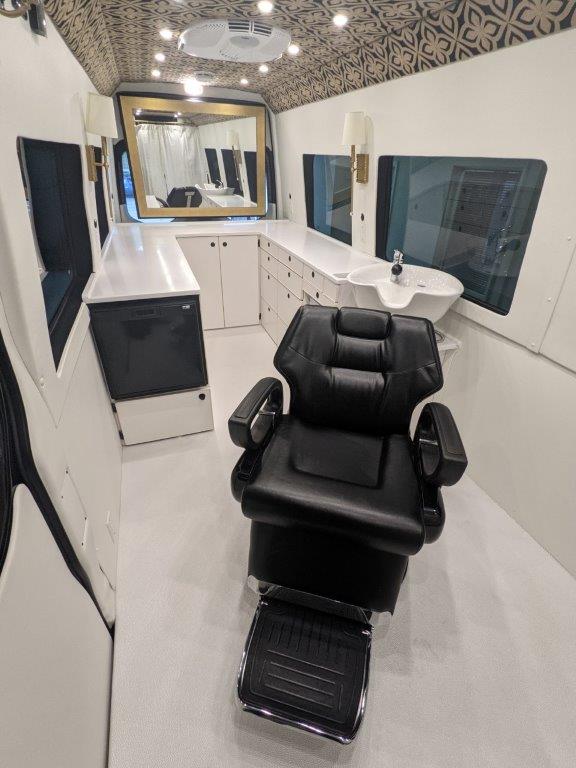
Media and production crews who use the van as a production office, color grading suite, dog groomers, hair stylists, or remote broadcast unit.
What Goes Into a Mobile Office Build
Every build is different, but these are the features that come up most in mobile office conversions:
Desk and work surface. A fixed or fold-out desk at the right height for sitting or standing, with enough surface area for a laptop and external monitor. Some customers opt for a wall-mounted fold-flat desk to reclaim floor space when the van is used for travel.
Power system. The electrical backbone of any mobile office. A 200–400Ah lithium battery bank, 200–400W of roof solar, a 2,000–3,000W inverter, and a shore power connection for overnight charging. This system runs everything, the A/C, the monitors, the internet, even the lights without the engine running.
Climate control. A rooftop A/C unit paired with a diesel heater provides reliable temperature control in all seasons. Sportsmobile integrates these cleanly into the van’s electrical system so you’re not running an extension cord to an external generator.
Connectivity. A Starlink antenna mounted to the roof and a cellular booster provide layered internet redundancy. Whether you’re in a city or off-grid, you stay connected.
Lighting. Bright, adjustable LED lighting that doesn’t create screen glare and makes the space feel like a real office rather than a van.
Storage. Organized, accessible storage for files, equipment, cables, and gear. Sportsmobile can build integrated cabinetry, overhead storage, and under-floor compartments to keep the workspace clean.
Security. Thunderbolts, reinforced doors, and window covers protect expensive equipment when the van is parked unattended. We also install many different types of safes.
The Best Van Platforms for a Mobile Office
Most professional mobile office conversions are built on one of three platforms:
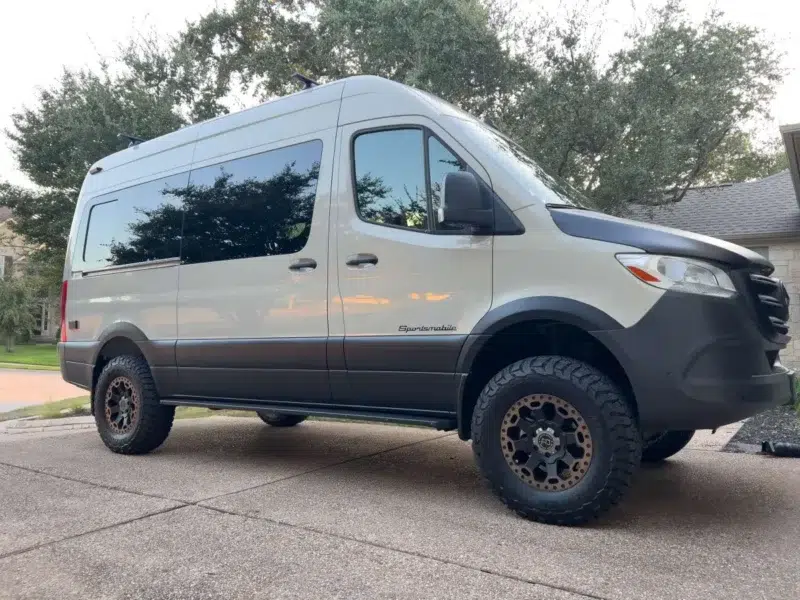
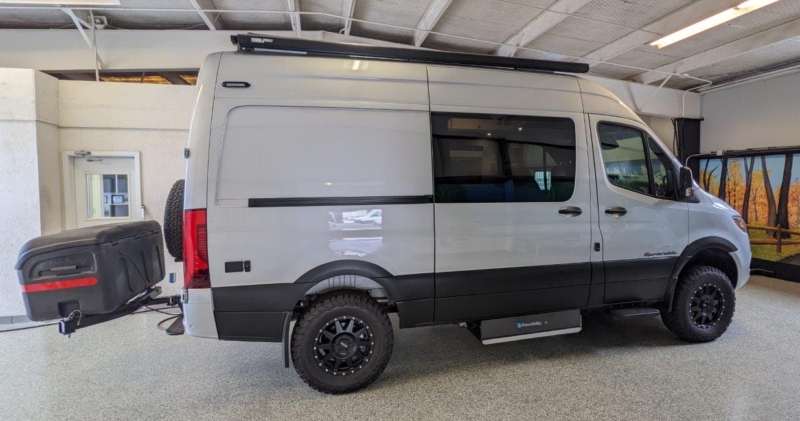
Mercedes-Benz Sprinter. The most popular choice for mobile offices. The high-roof option gives you 6’6″ of interior standing height, which makes a significant difference in comfort during a full workday. The diesel engine’s fuel efficiency helps on long daily drives. Available with AWD for professionals who work off-road or in rural areas.
Ford Transit. The widest interior of the three platforms at floor level, which gives you more desk and layout options. The lower base price means more budget for the conversion itself. A strong choice for professionals who prioritize interior width and cost efficiency.
Ram ProMaster. A completely flat floor with no drivetrain tunnel makes the ProMaster uniquely clean to build on. The flat floor simplifies furniture placement and routing cables and conduit. A good option for builds where the entire floor plan needs to be flexible.
What Does a Mobile Office Conversion Cost?
A purpose-built mobile office conversion from Sportsmobile typically ranges from $30,000–$80,000 for the conversion work, depending on the complexity of the electrical system, the technology integration, and the level of cabinetry and finish work.
That doesn’t include the base vehicle. A new Sprinter or Transit adds another $55,000–$70,000. Many customers start with a 2–4 year old van to keep the total project cost down.
For professionals who spend significant time working in the field, the math usually works quickly. The cost of rented office space, hotel rooms, co-working memberships, and lost productivity adds up faster than most people realize.
Sportsmobile Has Been Doing This Since 1961
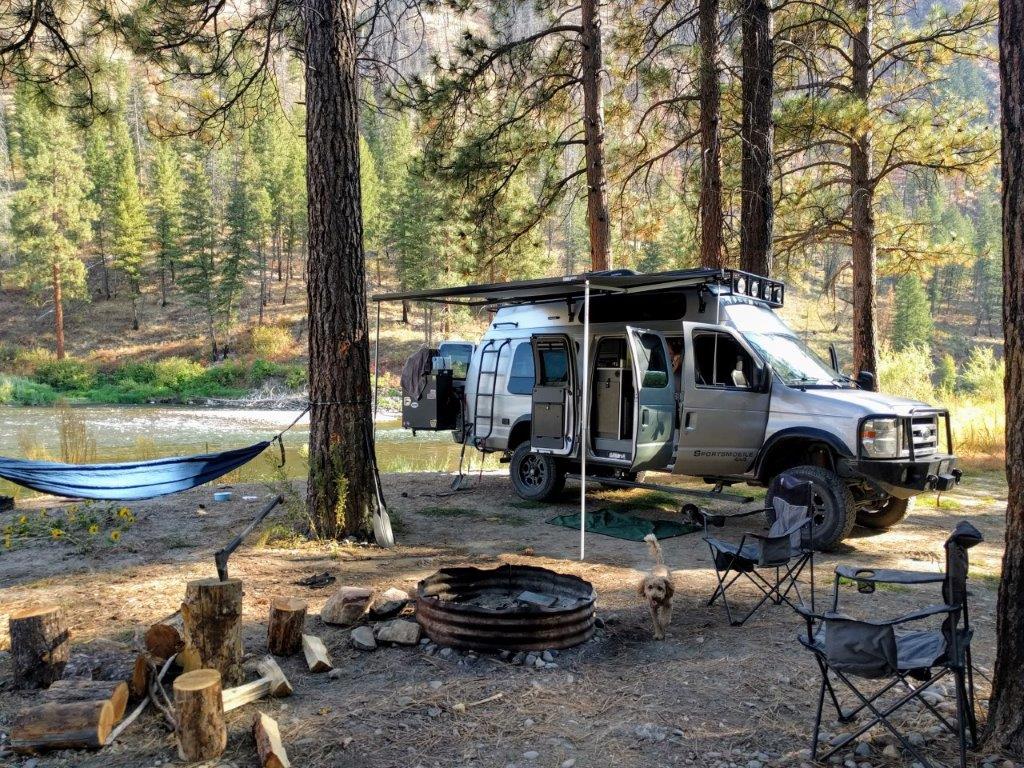
When most people hear “Sportsmobile,” they picture an overlanding van headed into the backcountry. And that’s a big part of what we build. But our history is rooted in utility; in building vans that help people do their work, wherever that work takes them.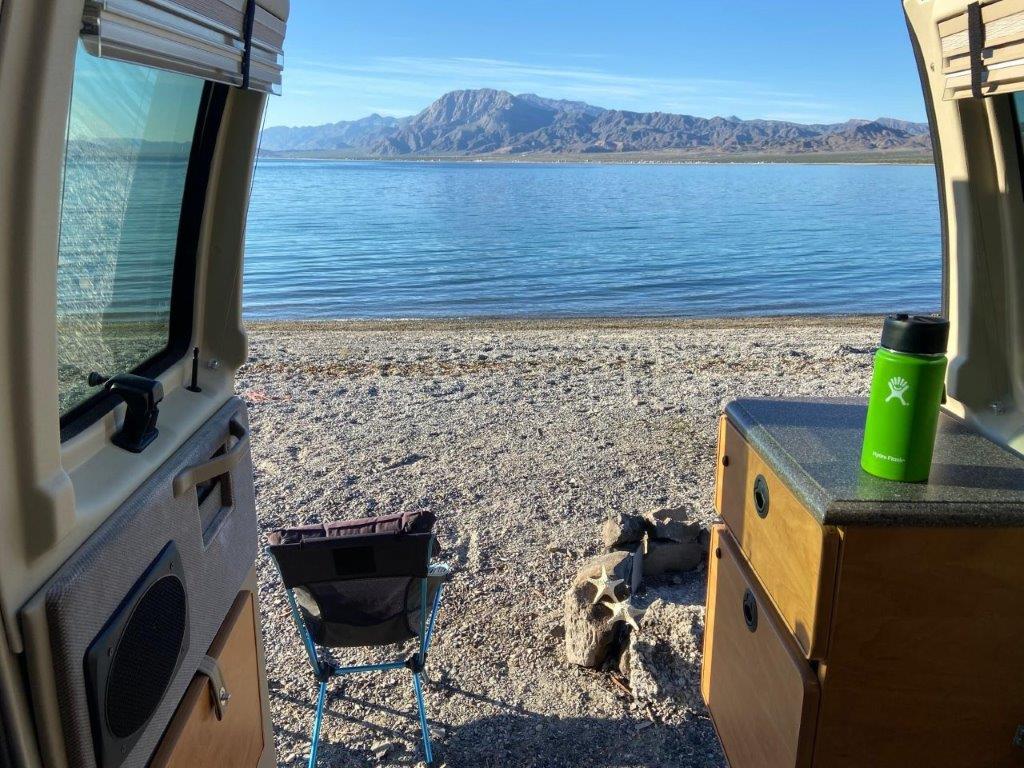
We have three locations: Austin TX, Huntington IN, and Gold Canyon AZ. Each location has a full team of builders, electricians, and designers who can work with you on a floor plan that fits your workflow.
Contact Us → | Start Your Adventure →
Frequently Asked Questions
How long does a mobile office van conversion take?
Most builds take 8–16 weeks depending on complexity and current build schedule. Contact us early. Sportsmobile builds are typically scheduled several months in advance.
Can I use my mobile office van for personal travel too?
Yes. Many Sportsmobile builds are designed as dual-purpose vehicles with a workspace during the week and a travel van on weekends. A fold-away desk, sleeping platform, and small kitchen can coexist in the same build.
What internet options work best in a mobile office van?
A combination of Starlink satellite and a cellular booster covers most scenarios. Starlink is highly reliable in fixed or parked positions. A cellular booster helps in areas with weak but present cell signal. Many customers run both systems for full redundancy.
Can I charge the electrical system without solar?
Yes. Sportsmobile builds include a shore power hookup that lets you connect to a standard 120V outlet overnight. You can also use the van’s alternator to charge the battery bank while driving.