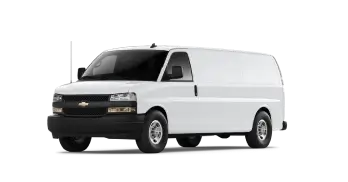


What Is a Chevy Express Van? The Complete 2026 Conversion Guide
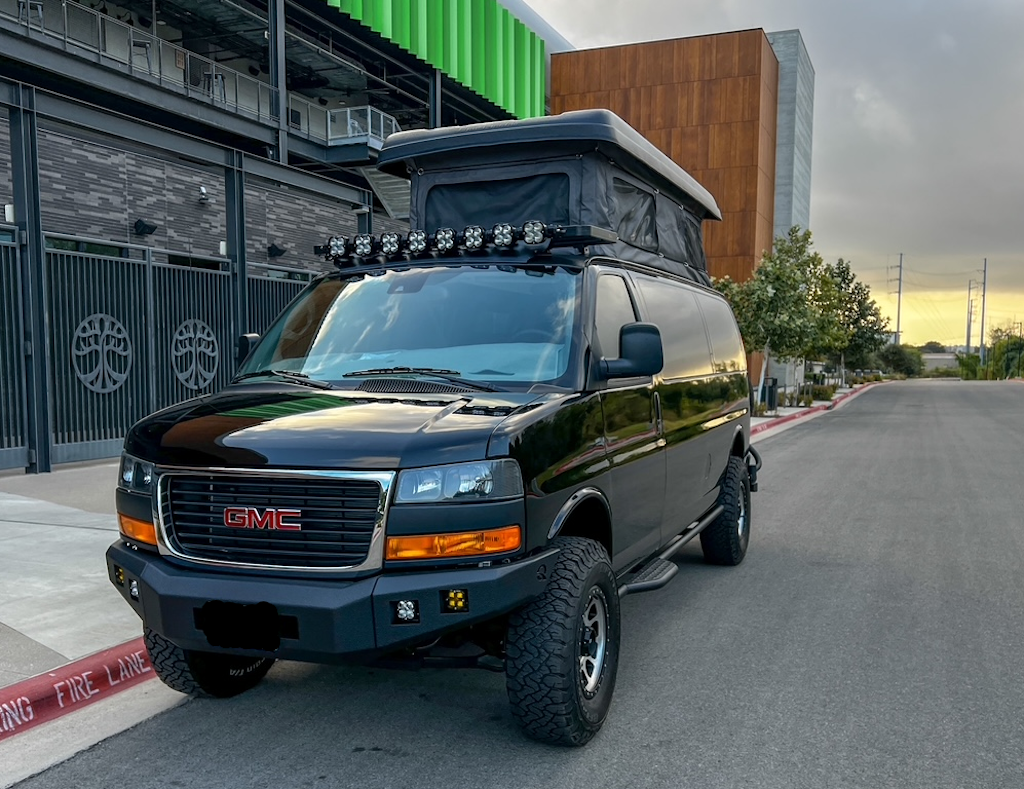
The Chevrolet Express might be the oldest platform still in production for van conversions, and that’s exactly why a lot of experienced builders love it. While newer vans like the Sprinter and Transit get the attention, the Express offers something they can’t: a body-on-frame V8 workhorse that’s been refined over 30 years, costs less than almost anything else on the market, and can be fixed by any mechanic in any small town in America.
This guide covers everything you need to know about the Chevy Express, its strengths, limitations, how it compares to modern alternatives, and why Sportsmobile has been building on this platform for decades.
What Is a Chevy Express Van?
The Chevrolet Express is a full-size van that has been in production since 1996. Along with its GMC twin, the Savana, it’s the last body-on-frame full-size van still sold in the United States. While Ford moved to the Transit and Ram introduced the ProMaster, Chevrolet kept the Express largely unchanged because its core customers (commercial fleets, conversion companies, and tradespeople) didn’t want a redesign. They wanted reliability.
The Express is built at General Motors’ Wentzville Assembly Plant in Wentzville, Missouri. It uses a traditional body-on-frame construction with a front-engine, rear-wheel-drive layout which is the same basic architecture as a pickup truck.
For van conversions, the Express represents the rugged, no-frills approach. It’s not the most refined, the most fuel-efficient, or the tallest. But it’s arguably the most mechanically bulletproof platform available, and it can be built into a serious expedition vehicle for significantly less than a Sprinter.
Chevy Express Sizes and Configurations (2026)
The Express is simpler than the Sprinter or Transit when it comes to configuration options.
Wheelbase and Length
The Express comes in two primary lengths:
- Express 2500 – 135″ wheelbase, roughly 19 feet overall. The standard-length model. The most common choice for conversions, offering a good balance of interior space and drivability.
- Express 3500 – available in 135″ and 155″ wheelbase (extended). The extended version adds approximately 2 feet of interior length. Better for builds that need a dedicated bathroom or more storage, but significantly longer to park and maneuver.
Roof Height
This is the Express’s most significant limitation. The factory roof height provides approximately 50 inches of interior cargo height. That’s less than 5 feet. You cannot stand up inside a stock Express.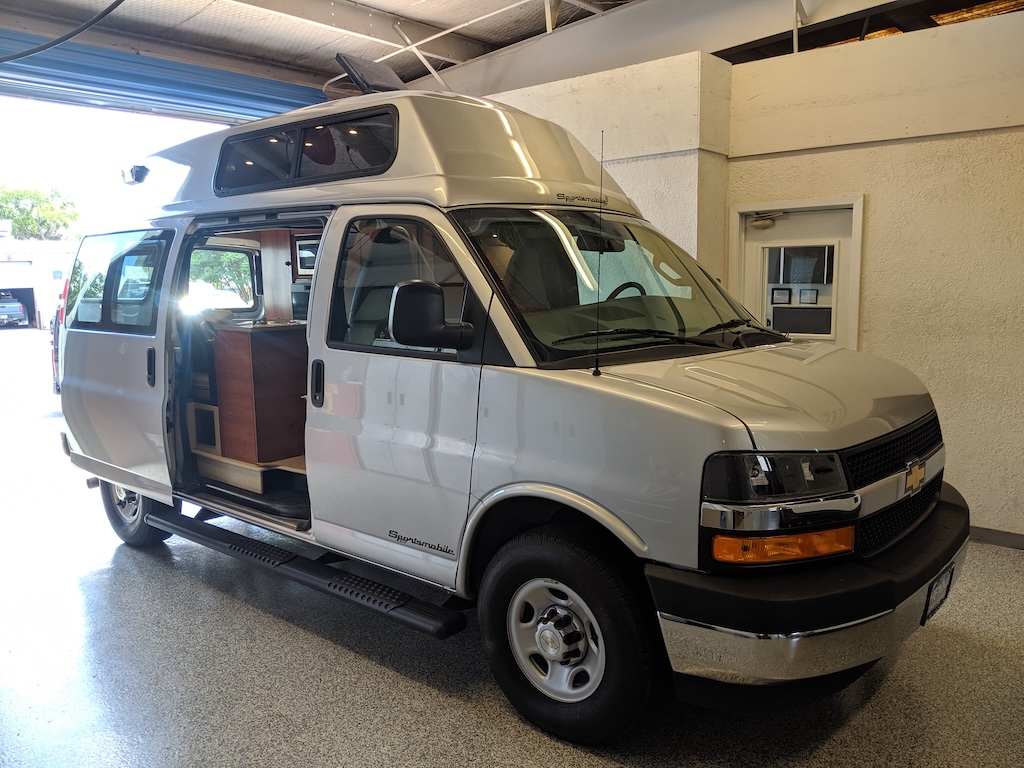
This is why aftermarket roof raises and Sportsmobile’s Penthouse Top are so popular on this platform. A Penthouse Top pop-up roof adds standing height when deployed and a second sleeping area, while keeping the van’s low profile when driving.
Sportsmobile installs fixed fiberglass high roofs that add 18–24 inches of permanent headroom. Sportsmobile offers both options depending on your priorities.
Cargo vs. Passenger
Like other vans in the segment, the Express is sold as a Cargo Van (empty rear), Passenger Van (up to 15 seats), and Cutaway Chassis (for specialty bodies). The Cargo Van is the standard starting point for conversions.
2026 Chevy Express Engine and Performance
The Express keeps it simple with one proven powertrain:
- 6.6L V8 gas engine – 401 hp, 464 lb-ft of torque. Paired with a 6-speed automatic transmission. Rear-wheel drive standard.
This is a serious engine. The 6.6L V8 produces more horsepower and torque than anything available in the Sprinter, Transit, or ProMaster. Here’s what that means in practice:
- Fuel economy: Roughly 10–14 MPG. This is the Express’s biggest weakness. The V8 is thirsty, especially when hauling a fully loaded conversion.
- Towing capacity: Up to 10,000 lbs – significantly higher than any unibody van
- Payload capacity: Up to 4,280 lbs
- GVWR: 8,600 – 9,900 lbs depending on model
- No DEF required on the gas V8
The trade-off is clear: you get massive power and torque, enough to tow a trailer, climb any mountain pass, and carry a heavy build, but you’ll pay for it at the pump.
4×4 Option
General Motors does not offer the Express with factory 4×4, however Quigley does. Key details:
- True part-time or full-time 4×4 available
- Available on both 2500 and 3500 models
- Adds approximately $17,000+ to the purchase price
- Includes upgraded suspension components
- Significantly improves traction in snow, mud, and loose surfaces
Additionally, the Express’s body-on-frame construction makes it one of the easiest vans to lift and modify for off-road use. Lift kits, larger tires, skid plates, and locking differentials are all straightforward bolt-on modifications, unlike the unibody Sprinter and Transit where suspension modifications are more complex. Superior off-roading capabilities.
What Does a Chevy Express Cost?
Stock (Unconverted) Express Pricing
A new 2026 Chevy Express Cargo Van starts around:
- Express 2500 Cargo Van: ~$44,000 (base) – $48,000 (fully equipped)
- Express 3500 Cargo Van: ~$46,000 (base) – $50,000 (fully equipped)
- Express 3500 Extended: ~$47,000 (base) – $51,000 (fully equipped)
- 4×4(Quigley): adds ~$17,000+
The Express is the most affordable full-size van platform available. A new high-roof Sprinter costs nearly double.
Used Express vans are exceptionally affordable. A well-maintained 2018–2022 model with 50,000–80,000 miles typically sells for $18,000–$30,000. Older models (2010–2016) can be found for $8,000–$18,000.
Custom Van Conversion Pricing
A professional Chevy Express conversion, the kind built by Sportsmobile, ranges from roughly $40,000 to $90,000+ for the conversion alone, depending on the build level and whether a roof raise or Penthouse Top is included. A complete turnkey Express conversion from Sportsmobile, including the van, typically ranges from $75,000 to $150,000+.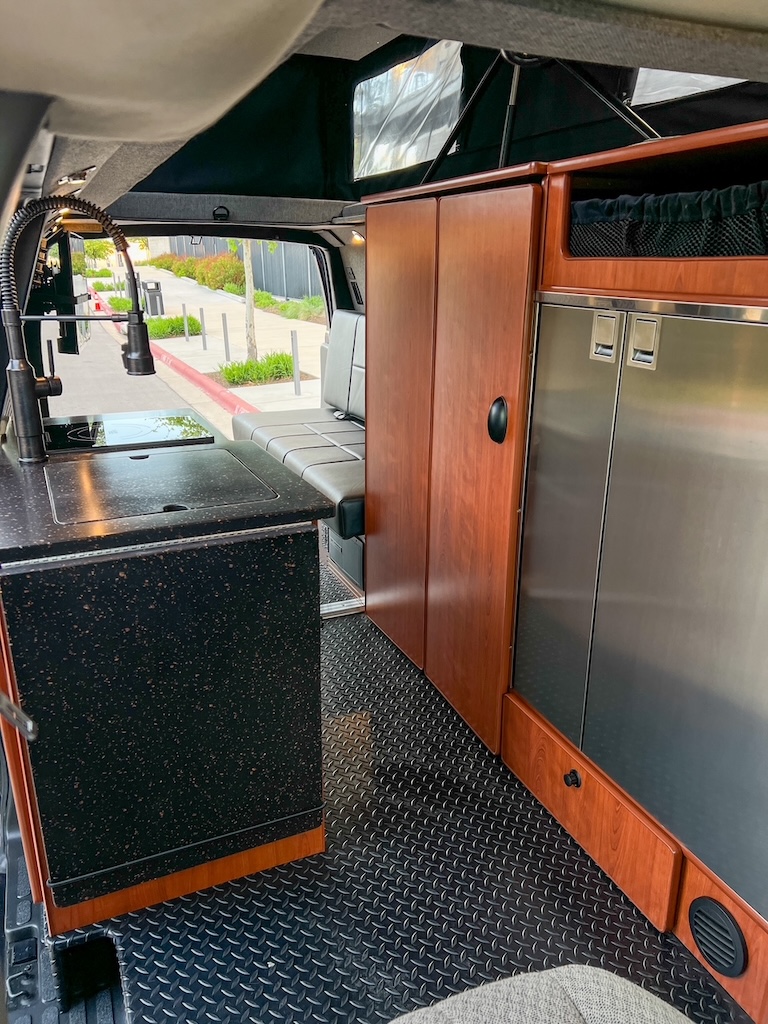
The Express’s low base price makes it the most accessible path to a professionally built adventure van. You can have a fully equipped, Sportsmobile-built Express conversion for less than the cost of a stock Sprinter 4×4.
Why Do People Convert Chevy Express Vans?
Mechanical simplicity and reliability. The Express’s body-on-frame V8 platform is as proven as it gets. There’s a reason fleet operators run these vans for 300,000+ miles. Fewer electronics, fewer emission-system components, fewer things to go wrong in remote locations.
Cheapest to buy and fix. The lowest purchase price of any full-size van, combined with V8 parts that are available at any auto parts store in America. An Express repair in a small Montana town costs a fraction of what a Sprinter repair costs at a Mercedes dealer.
Easiest to modify for off-road. Body-on-frame construction makes lift kits, suspension upgrades, armor, and drivetrain modifications significantly simpler than on unibody vans. The Express is the easiest van to turn into a true off-road expedition vehicle.
V8 power and towing. With 401 hp and 464 lb-ft of torque, the Express can tow a boat, trailer, or toy hauler behind a fully loaded conversion. No other van platform comes close to this capability.
Stealth factor. A Chevy Express looks like every other work van on the road. Nobody gives it a second look. For people who want to camp discreetly in urban areas or avoid attention, the Express is the ultimate stealth van.
Sportsmobile heritage. Sportsmobile has been building on the Chevy/GM platform since the company’s earliest days. We’ve refined the Express conversion over decades, and our Penthouse Top was originally designed for this platform. The institutional knowledge we have on Express builds is unmatched.
Chevy Express vs. Other Van Platforms
Mercedes Sprinter – different philosophy entirely. The Sprinter is taller, more fuel-efficient, more refined, and more expensive. The Express is more powerful, cheaper, simpler to fix, and easier to modify for off-road. The Sprinter is the luxury SUV; the Express is the pickup truck.
Ford Transit – the modern alternative. The Transit wins on fuel economy, interior height, driving dynamics, and factory AWD availability. The Express wins on durability, towing capacity, V8 power, off-road modifiability, and price. Different tools for different jobs.
Ram ProMaster – the widest interior with a flat floor, but front-wheel drive only and less proven long-term durability. The ProMaster is better for interior layout; the Express is better for rugged, go-anywhere reliability.
Ford E-Series – the Express’s closest cousin. The E-Series (E-250, E-350) is a body-on-frame V8 van that shares the same philosophy. Ford discontinued it for passenger/cargo use (it’s now chassis-only for cutaways), so the Express is the last van of this type still in production.
What to Look for When Buying a Chevy Express
Plan for a roof solution. The stock roof is too low for comfortable living. Budget for either a Sportsmobile Penthouse Top ($13,000+) or a fixed high-roof raise. This is the single most important modification for an Express conversion.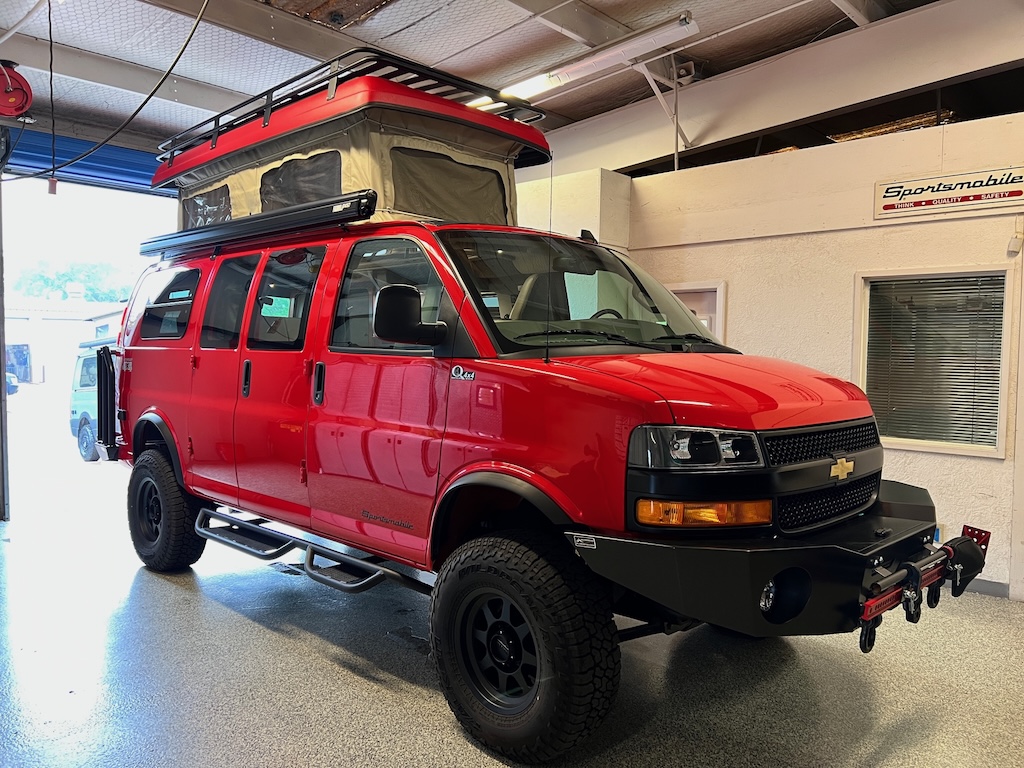
Consider the 2500 vs. 3500. The 2500 is lighter and gets slightly better fuel economy. The 3500 can carry more weight which is important if your build includes a heavy roof, lithium batteries, water tanks, and off-road accessories. Most Sportsmobile Express builds use the 3500 for payload headroom.
Budget for fuel costs. Be honest with yourself: 10–14 MPG is expensive. If you’re planning a cross-country trip, you’ll spend more on fuel than you would in a Sprinter or Transit. For some people, the Express’s lower purchase price offsets this. For others, it doesn’t.
Check the transmission. The 6-speed automatic in the Express is reliable, but on high-mileage used vans, check the transmission fluid condition and shift quality. A transmission rebuild is one of the more expensive Express repairs ($2,500–$4,000).
Get the 4×4 if you can. A factory Quigley 4×4 Express is significantly more capable off-road than the standard RWD model and holds its value much better in the resale market.
Frequently Asked Questions
Is a Chevy Express good for van life?
Yes, with the right modifications. The Express needs a roof raise or Penthouse Top for comfortable living, but once that’s addressed, it’s one of the most reliable and affordable van life platforms available. It excels at rugged, off-grid use where simplicity and durability matter more than fuel economy.
How many miles can a Chevy Express last?
The Express is known for exceptional longevity. The V8 engine platform regularly exceeds 300,000 miles with basic maintenance (oil changes, transmission fluid, spark plugs). The body-on-frame construction is also more resistant to the structural stress of heavy conversion builds.
Is a Chevy Express cheaper to convert than a Sprinter?
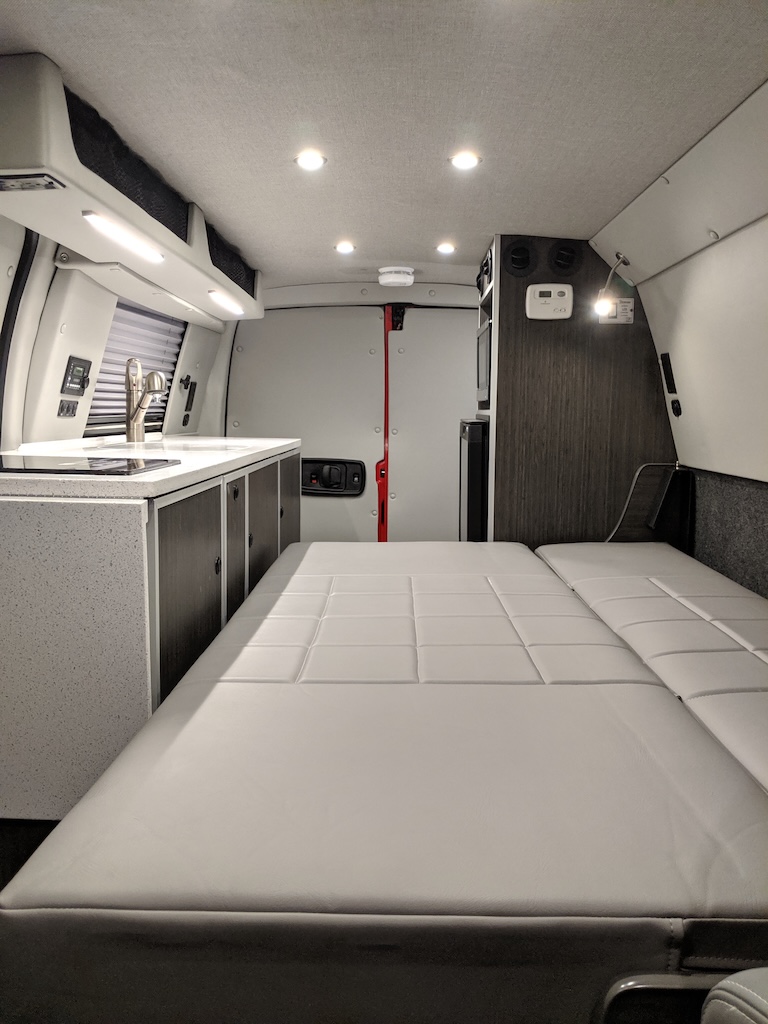
Significantly. The Express costs $20,000–$30,000 less to purchase, and the conversion can also be less expensive due to the simpler mechanical platform. A complete Sportsmobile Express conversion (van + build) can cost $30,000–$50,000 less than a comparable Sprinter conversion.
What year Chevy Express is best for conversion?
The 2020+ models with the 6.6L V8 engine are generally preferred for their increased power and torque. However, older models (2010–2019) with the 6.0L V8 are also excellent and significantly cheaper on the used market. Avoid the earliest models (1996–2002) unless you’re on a very tight budget.
Can you stand up in a Chevy Express van?
Not in a stock Express. The interior height is approximately 50 inches. You need either a Sportsmobile Penthouse Top (pop-up roof that provides full standing height when raised) or a permanent fiberglass high-roof installation. Both are popular and well-proven solutions.
Ready to Build Your Express?
Sportsmobile has been building custom van conversions since 1961, longer than anyone else in the industry. The Chevy Express is one of our original platforms, and our Penthouse Top was designed with this van in mind. We convert Mercedes Sprinters, Ford Transits, Ram ProMasters, and Chevy Express vans at our three locations in Austin TX, Huntington IN, and Gold Canyon AZ.
Whether you’re starting from scratch or bringing your own van, our team will help you design and build the adventure vehicle you’ve been dreaming about.
Explore Express Conversions → See Vans For Sale → Start Your Adventure →