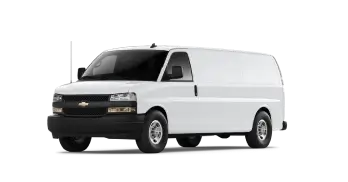


What Is a Ford Transit Van? The Complete 2026 Conversion Guide
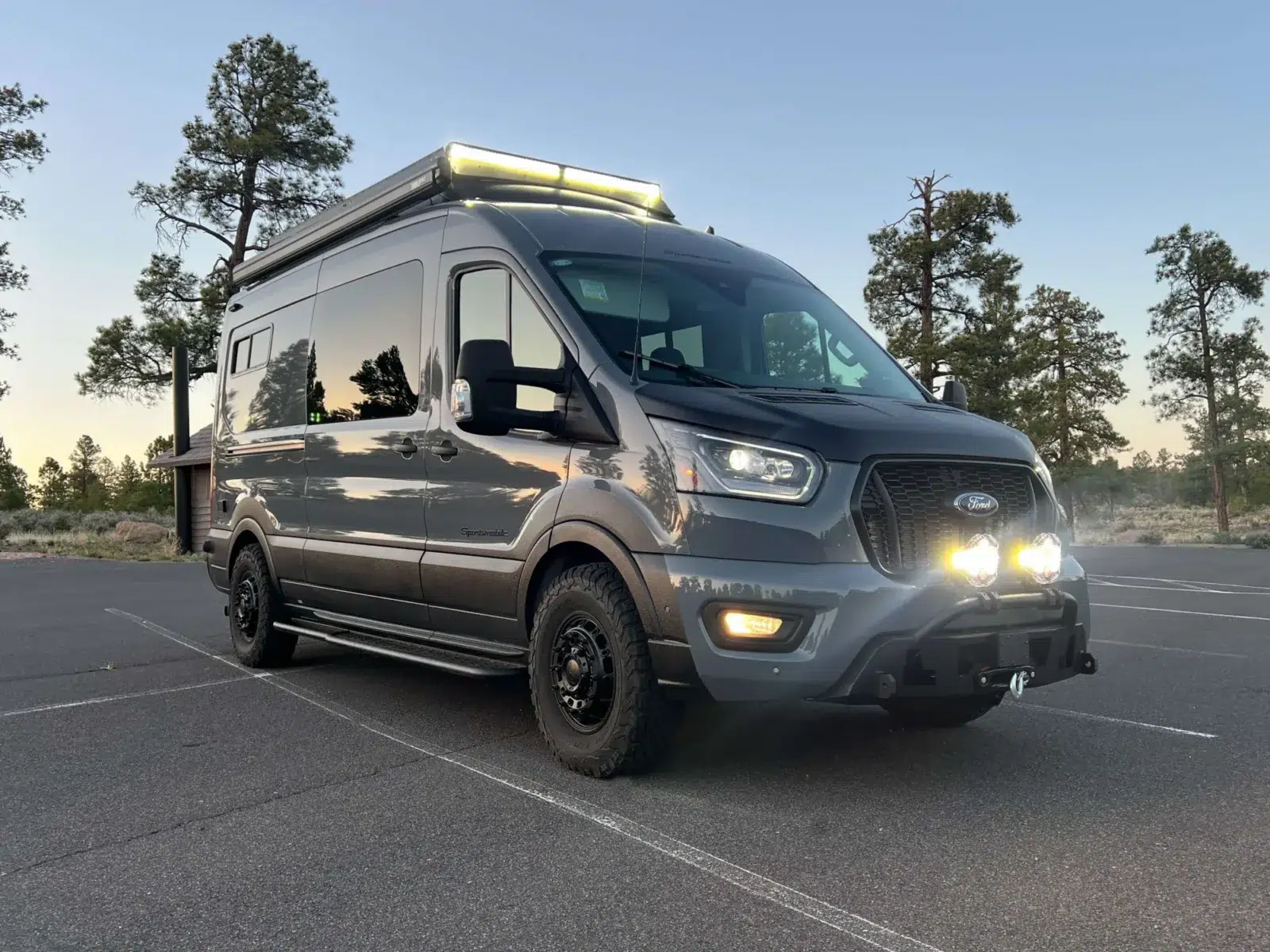
The Ford Transit has quietly become one of the most popular platforms for custom van conversions in the United States. It’s more affordable than a Mercedes Sprinter, easier to service at any Ford dealer, and available with all-wheel drive straight from the factory.
Whether you’re researching your first van build or comparing platforms for a professional conversion, this guide covers everything you need to know about the Ford Transit. We’ll be going over the sizes, specs, costs, AWD capability, and how it stacks up against the competition.
What Is a Ford Transit Van?
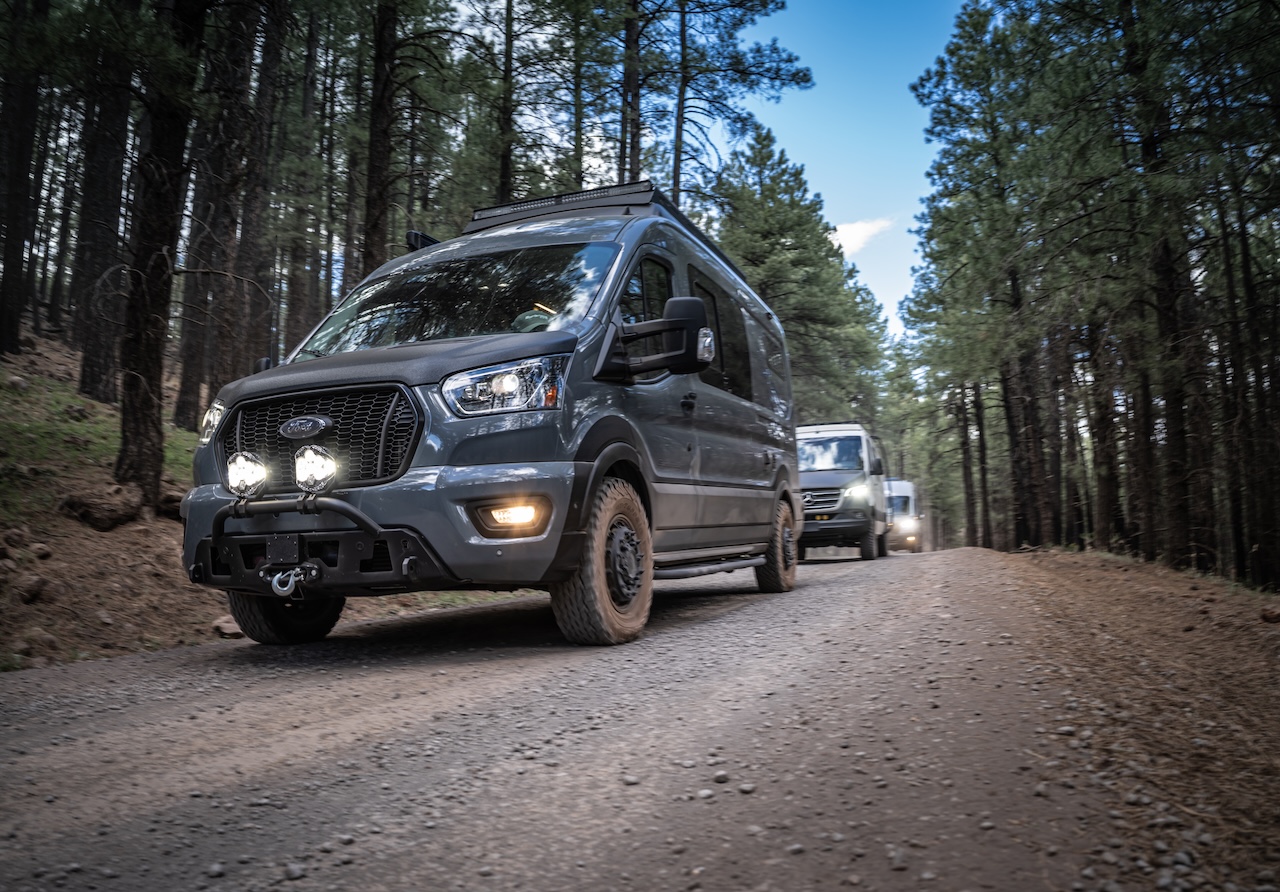
The Ford Transit is a full-size commercial van built by Ford Motor Company. It replaced the iconic Ford E-Series (Econoline) in 2015 as Ford’s primary full-size van offering. While the E-Series was a truck-based, body-on-frame design, the Transit uses a modern unibody platform that’s lighter, more fuel-efficient, and significantly better to drive.
Ford builds the Transit at their Kansas City Assembly Plant in Claycomo, Missouri. It’s one of the most widely sold commercial vans in the world, which means parts availability, dealer service networks, and aftermarket support are exceptional across the U.S.
For van conversions, the Transit hits a sweet spot: it’s large enough to build a comfortable living space, affordable enough that you’re not spending your entire budget on the base vehicle, and simple enough that any mechanic in the country can work on it.
Ford Transit Sizes and Configurations (2026)
The Transit offers a wide range of configurations, nearly as many as the Sprinter. Here’s what’s available.
Wheelbase Options
The Transit comes in three wheelbase lengths:
- Regular wheelbase (RWB) – 130″ wheelbase, roughly 18 feet overall. The most compact option. Good for daily driving and city use, but tight for full-time van life.
- Long wheelbase (LWB) – 148″ wheelbase, roughly 20 feet overall. The most popular choice for conversions. Fits a full bed, kitchen, and basic bathroom while still being manageable to drive and park.
- Extended long wheelbase (ELWB) – 148″ wheelbase with an extended body, roughly 22 feet overall. Maximum interior space. Best for families, mobile offices, or builds where you need a dedicated bathroom and large galley.
Roof Heights
The Transit comes in three roof options:
- Low Roof – 50 inches of interior height. This vehicle’s popular for customers that want a low profile, specific models with our penthouse top can fit in a 84” garage, great for the trails when height is a concern.
- Medium Roof – 70 inches of interior height. The average American is under 5’10”, so this is perfect for most customers, better fuel efficiency and lower exterior height. Our penthouse top can be added.
- High Roof – 77 inches of interior height. This is what you want for any conversion that involves living in the van. More storage and headroom. It’s taller than the Sprinter’s high roof by about 3 inches.
Cargo vs. Passenger vs. Crew
Ford sells the Transit in Cargo Van, Passenger Wagon, and Crew Van configurations. For conversions, the Cargo Van is almost always the right starting point. It’s a blank canvas with no rear seats, headliner, or interior trim to remove.
2026 Ford Transit Engine and Performance
For 2026, the Transit offers two engine options:
- 3.5L V6 gas engine – 275 hp, 262 lb-ft of torque. Paired with a 10-speed automatic transmission. This is the standard engine and what most conversion buyers choose. It runs on regular unleaded gasoline, which makes refueling simple anywhere.
- 3.5L EcoBoost V6 twin-turbo – 310 hp, 400 lb-ft of torque. Same 10-speed automatic. More power for heavy builds, towing, or mountain driving. Uses premium fuel.
Here’s what that means in practical terms:
- Fuel economy: Roughly 13–18 MPG depending on configuration and load. The gas engine is less efficient than the Sprinter’s diesel, but fuel is cheaper per gallon and available everywhere.
- Towing capacity: Up to 7,500 lbs (varies by configuration)
- Payload capacity: Up to 5,100 lbs (Cargo Van, low roof)
- GVWR: 9,070–10,360 lbs depending on configuration
One major advantage of the Transit: no DEF (Diesel Exhaust Fluid) required. The gas engines are simpler to maintain with fewer emission-related components that can cause expensive repairs.
All-Wheel Drive (AWD)
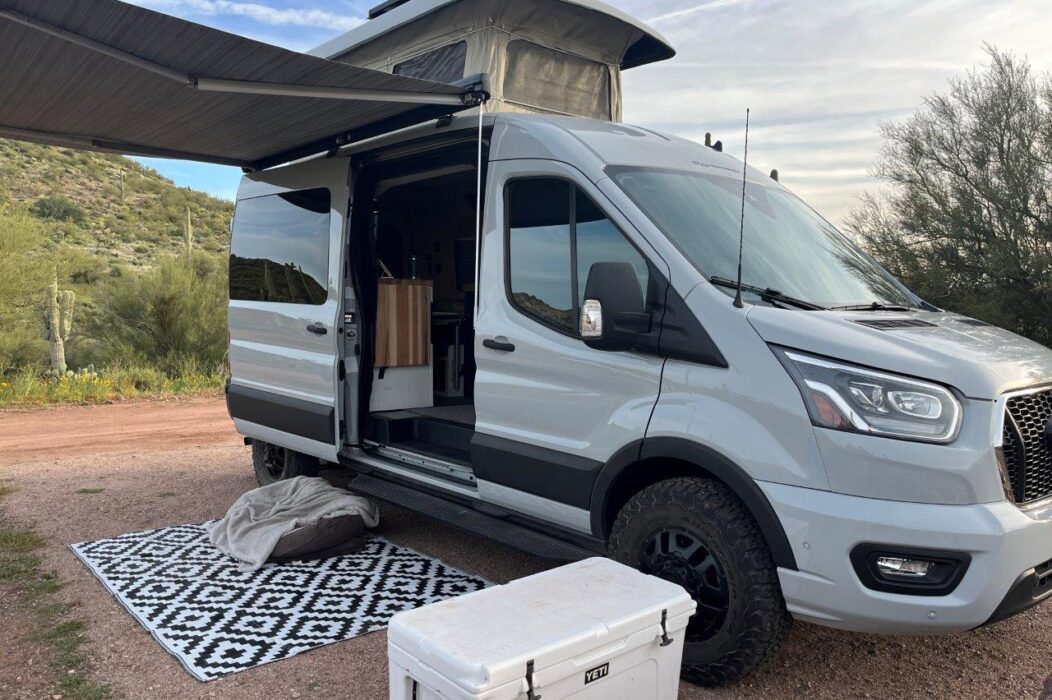
The Transit offers factory AWD on both engine options. Ford’s intelligent AWD system automatically
distributes torque between the front and rear axles based on traction conditions. Key points:
- Available on all wheelbases and roof heights
- Adds roughly 1 inch of ground clearance
- No low-range transfer case
- Handles rain, snow, mud, and gravel roads well
- Adds $3,900 to the base price
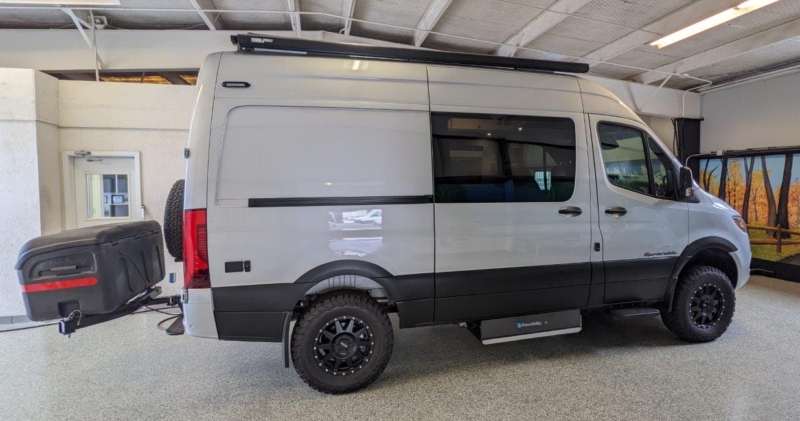
For more serious off-road capability, aftermarket companies like Quigley Motor Company offer true 4×4 conversions with a two-speed transfer case and higher ground clearance. A Quigley conversion adds $8,000–$15,000 but turns the Transit into a genuine off-road platform.
What Does a Ford Transit Cost?
Stock (Unconverted) Transit Pricing
A new 2026 Ford Transit Cargo Van starts around:
- Regular wheelbase, low roof, RWD: ~$48,000
- Long wheelbase, high roof, RWD: ~$54,000
- Long wheelbase, high roof, AWD: ~$57,900
That’s $10,000–$15,000 less than a comparable Sprinter, which is one of the Transit’s biggest advantages for conversion buyers.
Used Transits (2019–2022, high roof, 40,000–80,000 miles) typically sell for $25,000–$40,000.
Custom Van Conversion Pricing
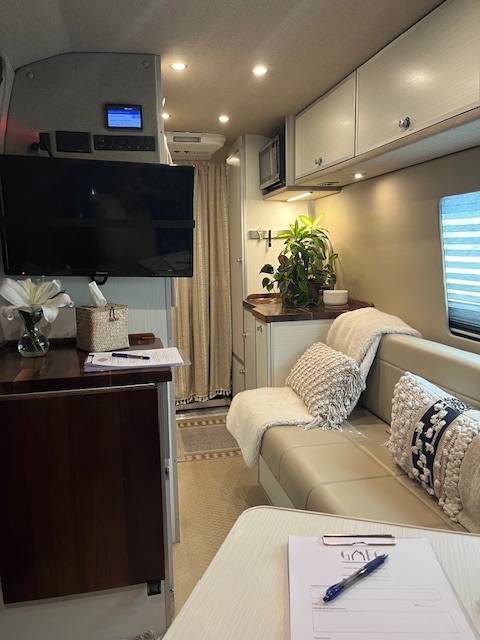
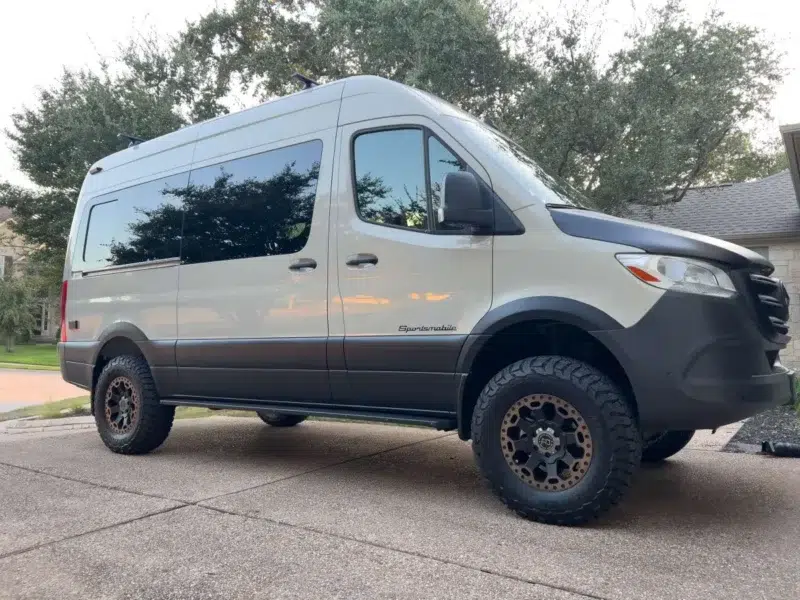
A professional Ford Transit conversion, the kind built by companies like Sportsmobile, ranges from roughly $50,000 to $110,000+ for the conversion alone, depending on the level of build. A complete turnkey Transit conversion from Sportsmobile, including the van, typically ranges from $100,000 to $175,000+ depending on the chassis, floor plan, and options selected.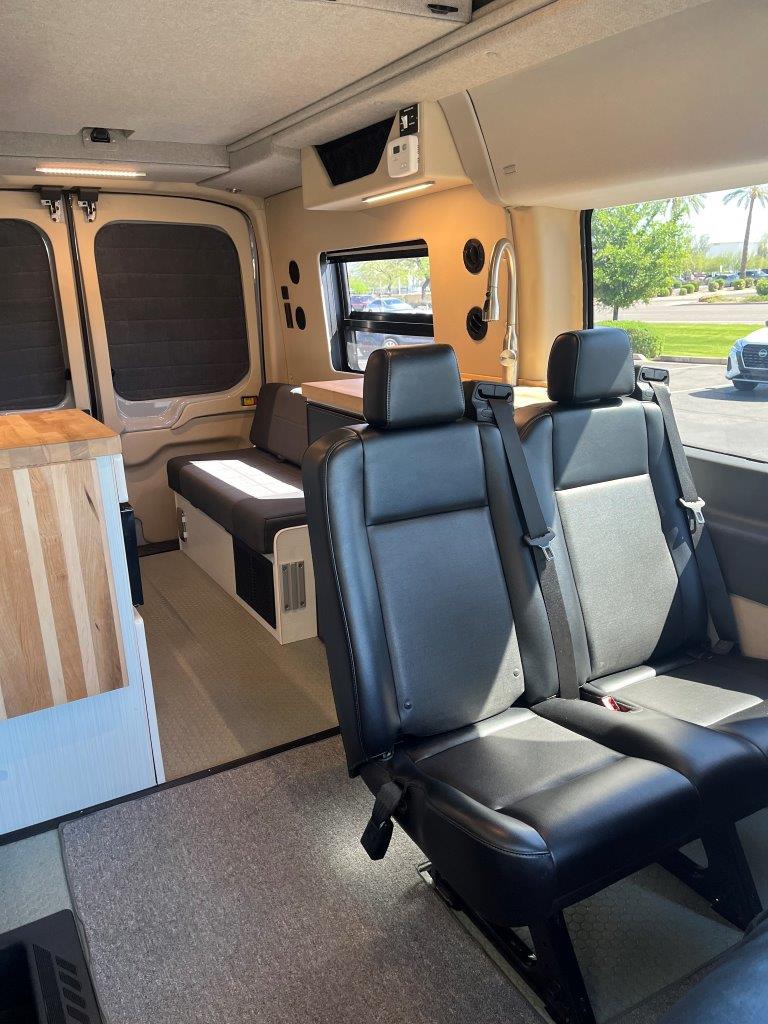
The Transit’s lower base price means you can put more of your budget into the actual conversion. Better electrical, nicer finishes, or more off-grid capability.
Why Do People Convert Ford Transits?
The Transit has surged in popularity for conversions over the past five years for several practical reasons:
Lower cost of entry. The Transit costs significantly less than a Sprinter at every price point. That’s money you can redirect into the build.
Interior Width. The Transit’s interior is approximately 2 inches wider than the Sprinter at the floor. That extra width makes a noticeable difference in floor plan design which comes in handy, especially for beds, cabinetry, and moving around inside the van.
Gas engine simplicity. No diesel particulate filters, no DEF, no injector issues. The Ford 3.5L V6 is one of the most proven engines in the industry. Any Ford dealer or independent mechanic can service it.
Massive dealer network. Ford has over 3,000 dealers in the U.S. which is roughly triple the Mercedes-Benz commercial van dealer network. If something breaks in a small town, you’ll find a Ford dealer.
Tall high roof. At 77 inches of interior height, the Transit high roof is actually taller than the Sprinter high roof. Most adults can stand fully upright with a finished floor and ceiling.
AWD availability. Factory AWD on all configurations means you don’t need an aftermarket conversion for all-weather capability.
Ford Transit vs. Other Van Platforms
Mercedes Sprinter – the Transit’s closest competitor. The Sprinter wins on diesel efficiency, build quality perception, and resale value. The Transit wins on purchase price, interior width, service simplicity, and dealer network. Sportsmobile converts both platforms.
Dodge ProMaster – front-wheel drive only, which gives it a completely flat floor (great for interior layout). Wider than both Transit and Sprinter. But no factory AWD or 4×4 option, and the FCA drivetrain doesn’t have the same durability reputation.
Chevy Express – the budget option. Body-on-frame, V8 powered, extremely reliable and cheap to maintain. Lower roof height limits standing room. Sportsmobile has been converting Express vans for decades and they remain popular for rugged, no-frills builds.
Ford E-Transit – the electric Transit. Zero emissions and lower operating costs, but limited range (~126 miles loaded) and no AWD make it impractical for most van life or overlanding use cases today. Worth watching as battery technology improves.
What to Look for When Buying a Ford Transit
If you’re shopping for a Transit, whether new or used:
Consider AWD. Even if you don’t plan to go off-road, AWD handles rain, snow, and gravel dramatically better than RWD. It also improves resale value.
Choose the right wheelbase. The long wheelbase is the sweet spot for most couples. The extended body is worth it for families or builds that need a dedicated bathroom. Talk to your conversion company first. The wheelbase and weight class depend entirely on your floor plan. Sportsmobile’s team can help you spec the right chassis for your build.
Check for recalls on used models. Early Transit model years (2015–2017) had some known issues with door latches and driveshaft components. Later models are significantly improved.
Budget for the full picture. The van is only part of the cost. Conversion, insurance, maintenance, and gear upgrades add up. A realistic all-in budget for a professional Transit conversion is $100,000–$175,000+.
Frequently Asked Questions
Is a Ford Transit good for van life?
Yes. The Transit is one of the top three platforms for van life conversions alongside the Mercedes Sprinter and Dodge ProMaster. Its combination of interior space, affordability, and service simplicity makes it an excellent choice for both weekend adventurers and full-time van dwellers.
How many miles can a Ford Transit last?
The Ford 3.5L V6 engine is proven to exceed 200,000 miles with proper maintenance. The Transit’s gas engine is simpler than the Sprinter’s diesel, with fewer expensive emission-related components that can fail.
Is a Ford Transit better than a Sprinter for conversions?
Neither is objectively “better”, they serve different priorities. Choose the Transit if you want lower cost, easier maintenance, and a wider interior. Choose the Sprinter if you want diesel efficiency, higher resale value, and a longer driving range per tank. Choose the Transit if you want gas engine and more service options. Sportsmobile builds on both platforms and can help you decide.
Can you get a Ford Transit in 4×4?
Ford offers factory AWD (all-wheel drive) on the Transit, which handles most conditions well. For true 4×4 with low-range gearing, companies like Quigley Motor Company offer aftermarket conversions that add serious off-road capability.

What is the best Ford Transit configuration for a van conversion?
The most popular conversion configuration is the long wheelbase, high roof, AWD Cargo Van with the standard 3.5L V6 engine. This gives you the best balance of interior space, drivability, and all-weather capability without the premium of the EcoBoost engine.
Ready to Build Your Transit?
Sportsmobile has been building custom van conversions since 1961, longer than anyone else in the industry. We convert Mercedes Sprinters, Ford Transits, Dodge ProMasters, and Chevy Express vans at our three locations in Austin TX, Huntington IN, and Gold Canyon AZ.
Whether you’re starting from scratch or bringing your own van, our team will help you design and build the adventure vehicle you’ve been dreaming about.
Explore Transit Conversions → See Vans For Sale → Start Your Adventure →